
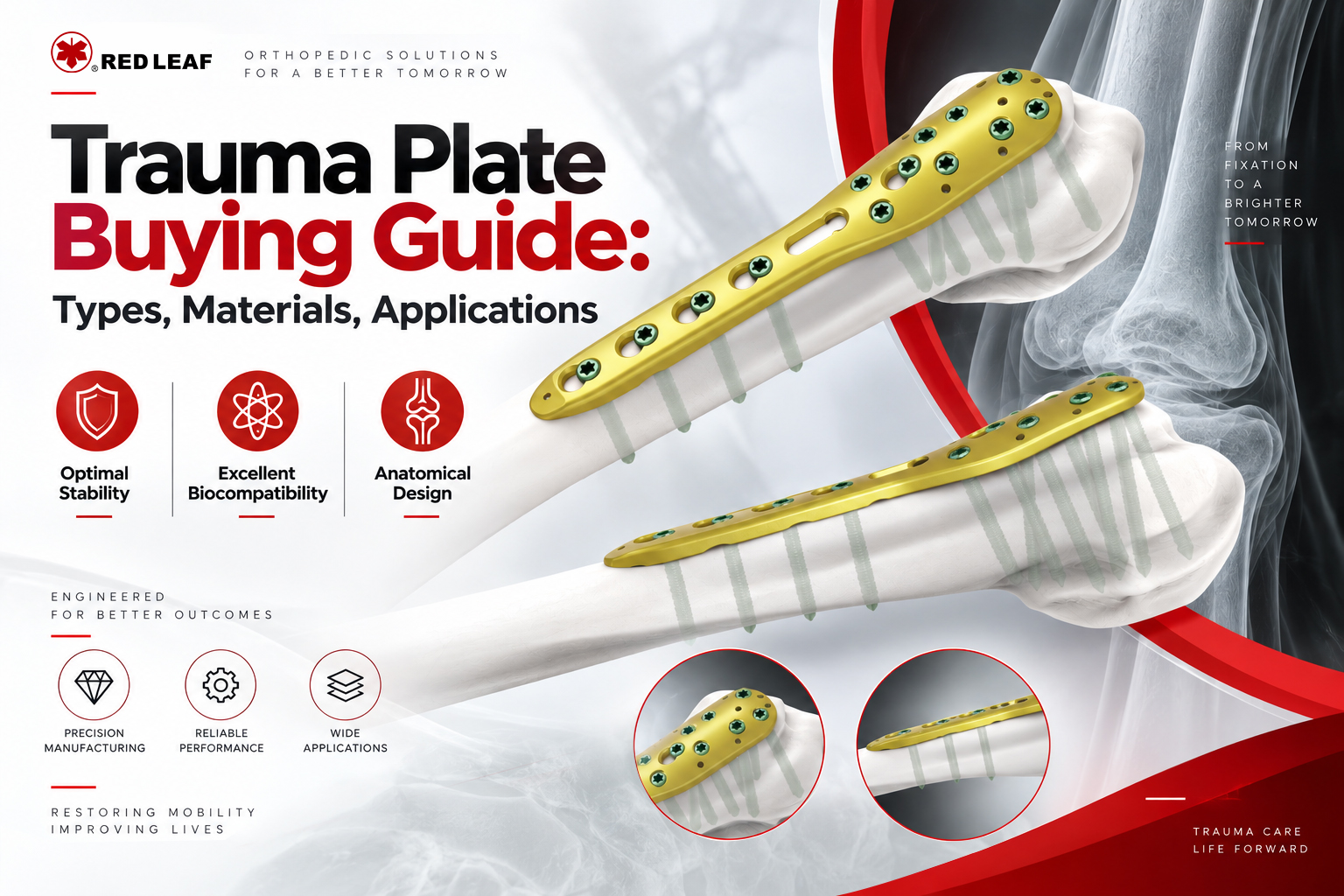
The clinical use of Trauma Plate needs to be matched according to the patient’s anatomical structure, fracture type, bone density and quality, and bone screw system.
Choosing the right Trauma Plate is not just about surgical clinical needs – for Purchasing Manager, product quality, technical support, stable delivery capabilities, and flexible OEM capabilities are even more important.
This guide covers commonly used types, materials, applications, and supplier selection of Trauma Plate, which can help you find products that meet your requirements and develop a suitable procurement plan.
Why Are There Different Types of Trauma Plate?
Trauma Plate are designed based on human skeletal anatomy, materials, size, and intended use. Different fracture sites, fra
cture morphologies, and bone density qualities require different Trauma Plate for treatment.Different fractures require different fixation strategies.
Anatomical Structure
Anatomical plates are designed based on the anatomical form of the human body. For example, Distal Radius Plates, as one of the most common injuries in upper limb fractures, are specially designed to quickly fix and restore the structure of the wrist joint. They are specifically designed for wrist fracture injuries and are suitable for distal radius fractures, comminuted fractures, and osteoporotic fractures. There are also Orthodox plates of the same type PHILOS (Proximal Humerus Internal Locking System) Plate、Distal Femur Plate、Proximal Tibia Plate Wait for the board.
locking vs Non-locking Fixation
The design of locking plates is already the most advanced Trauma Plate available today. Locking plates have combination holes that can accommodate both locking screws and standard (critical) screws simultaneously,Surgeons use that setup to build fixed-angle constructs. It also keeps the plate from sitting too heavily on the bone, which helps protect periosteal blood flow during surgery and can speed up healing.
Bone Quality
In clinical practice, a patient’s bone quality also affects implant selection. Traditional screw fixation relies on compression between the plate and the bone – but that approach really only works well when bone quality is good. For osteoporotic patients, locking screws are usually needed to provide angular stability.
Trauma Plate, bone screws, and surgical instruments together, and you have a package that covers most of what surgeons need in clinical procedures. For orthopedic importers, carrying both locking and non-locking systems makes clear business sense: it widens your customer base and lets you meet more needs, more effectively.
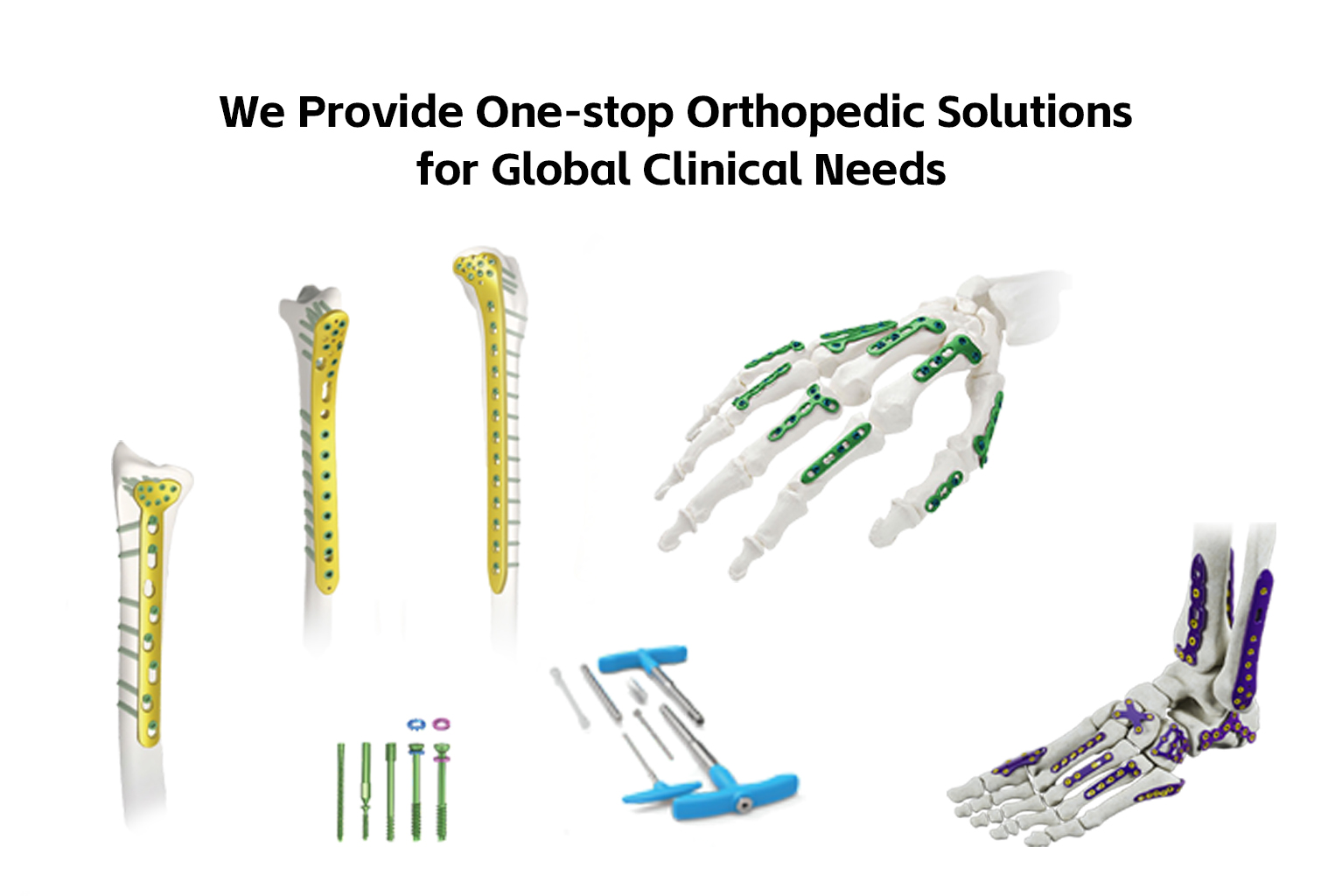 Applications and Characteristics of Trauma Plate Types
Different fractures require different fixation strategies. According to the human skeletal structure and clinical needs, each type of Trauma Plate has different sizes and shapes.During the buying process, factors such as fracture characteristics, locking versus non-locking designs, product specifications, and screw compatibility for maintenance need to be considered.According to the different types of fractures, they can be divided into the following types of Trauma Plate:
Dynamic Compression Plate (DCP)
Dynamic Compression (DCP) is a traditional and highly effective fixation method used in clinical fracture surgery. It employs plates and screws to exert compressive force across the fracture site, thereby stabilizing the fracture and promoting healing.
Features Characteristics
- Compression hole design
- Excellent fracture stability
- Versatile implant
- Multiple plate lengths
Application
- Simple transverse fracture of long bone
- Short oblique fracture
- Partial fixation of diaphyseal fractures
Locking Compression Plate (LCP)
While complex comminuted fractures or metaphyseal fractures can be fixed with locking compression (LCP) by inserting locking screws to form a fixed angle structure. It is currently one of the most widely used orthopedic implants in the field of modern orthopedic trauma.
Features Characteristics
- Locking screw technology
- Angular stability
- Anatomically contoured design
- High mechanical strength
Application
- Osteoporotic fracture
- Comminuted fracture
- Periarticular fracture
- Metaphyseal fracture
- Partial application of proximal humerus and distal radius
Anatomical Plate
Anatomical Plate is designed based on a specific skeletal anatomical model of the human body. The contour of the steel plate is pre shaped to provide more accurate fixation for complex fractures and reduce postoperative stimulation of soft tissues by the steel plate.
Features Characteristics
- Anatomical fit
- Low-profile design
- Locking technology
- Angular stability
Application
- Osteoporotic fracture
- Comminuted fracture
- Periarticular fracture
- Complex intra-articular fractures
Reconstruction Plate
With multiple holes along the plate, reconstruction plates can be cut and contoured during surgery to better match the fracture site. They are often used in areas where the bone has a more complex shape, such as the pelvis or scapula.
Features Characteristics
- Be cut and contoured
- High flexibility
Application
- Pelvic fractures
- Scapular fractures
- Clavicle fractures
- Fractures of other irregular sites
Pediatric Plate
The pediatric plate is specifically designed for pediatric fractures. Since children’s bones are still growing and skeletally immature, the plate must possess high toughness and low brittleness to avoid interfering with normal bone growth.
Features Characteristics
- Low profile
- Small size
Application
- Pediatric long bone fractures
- Pediatric forearm fracture
- Fractures in patients with open epiphyses
- Other pediatric fixation applications based on the specific implant system
Trauma Plate Types Comparison
There is no single Trauma plate for every case.DCP work well for simple shaft fractures, while LCP provide angular stability when bone quality is poor. Anatomical plates fit complex joint areas, and reconstruction plates can be shaped for irregular bones such as the pelvis. For importers and distributors, the key is to balance locking and non-locking systems, product coverage, and inventory costs rather than choosing one “best” plate.
| Plate Types | Clinical Scenario | advantage | Limitation |
| DCP | Simple shaft fracture in a young adult | Cost-effective; dynamic axial compression | No angular stability; conventional fixation may be less suitable for poor bone quality |
| LCP | Comminuted / osteoporotic / selected peri-articular fractures | Angular-stable construct; versatile fixation options | Higher system cost; requires compatible screws and appropriate instruments |
| Anatomical Plate | Peri-articular and anatomically complex fractures | Pre-contoured anatomical fit | Side-specific and region-specific; increases inventory complexity |
| Reconstruction Plate | Pelvis, clavicle and irregular anatomical regions | Highly malleable; easy contouring | Mechanical limitations depend on design and indication; repeated bending can affect fatigue performance |
| Pediatric Plate | Selected pediatric fractures | Low profile and smaller dimensions | Specialized market; multiple sizes can increase inventory requirements |
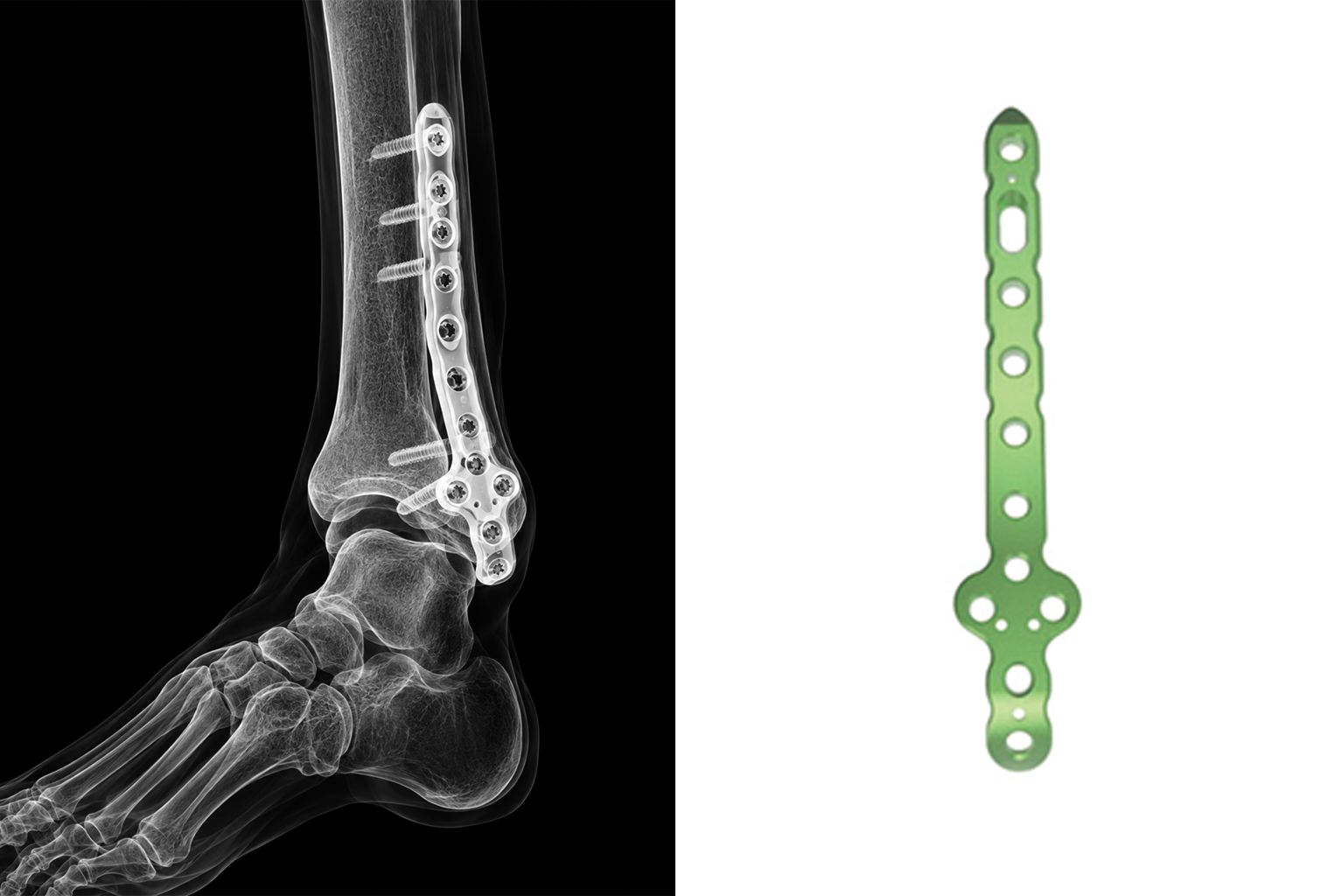 Application of Trauma Plates
Trauma plates are used for internal fixation of fractures in different parts of the body, including the clavicle, humerus, radius, ulna, femur, tibia, fibula, and ankle. The plate design is selected according to the fracture pattern, anatomical location, and bone quality.
Different plates are suited to different clinical situations. Anatomical plates are designed to follow the shape of specific bones, while reconstruction plates can be contoured to fit areas with irregular anatomy. Compression plates may be used when controlled compression is needed, whereas locking plates can provide angular stability for more complex fractures.
Advantages of Trauma Plate Fixation
Compared with traditional methods such as casting, traction, and basic external fixation, orthopedic plate fixation gives surgeons more direct internal support for many fracture types. It helps restore bone alignment and maintain stability during healing. That stability also plays a role in preserving bone shape and joint function—especially when the fracture is complex.
Another advantage is the range of fixation options available.Locking and non-locking plates can be selected according to the fracture pattern and bone condition. Different plate shapes and sizes, meanwhile, allow fixation to be adapted to specific anatomical sites. For complex fractures, especially those involving a joint or weaker bone, an appropriate plate and screw configuration can provide the stability needed throughout the healing process.
FAQ
What Materials Are Trauma Plate Made Of?
Trauma Plate are usually made from medical-grade stainless steel or titanium alloys. In some specific applications, you’ll also see cobalt-based alloys and bioceramics. Why these materials? They offer a mix of strength, corrosion resistance, and biocompatibility. Depending on the product design, manufacturers may also apply surface treatments or coatings to meet particular performance requirements.
Titanium vs. Stainless Steel: Which Is Better for Importers?
Both titanium alloys and stainless steel are widely used in orthopedic fixation—and neither is universally “better.” Titanium is lighter and generally produces fewer imaging artifacts than stainless steel, which can be helpful for follow-up imaging. The trade-off? Titanium implants typically cost more.
Stainless steel is often the more cost-conscious option and remains widely used. For importers and distributors, offering both materials gives you greater flexibility when meeting different market and customer requirements. At the end of the day, the right choice depends on the specific clinical application, surgeon preference, and other product requirements.
Can Trauma Plate Be Removed?
Not always. If the implant is functioning properly and the patient has no implant-related problems, the surgeon may decide to leave it in place. Removal may be considered when there’s persistent pain or irritation, infection, prominent hardware, implant loosening or failure, or another specific clinical reason. Ultimately, the decision should be made by the treating surgeon based on the patient’s condition and follow-up evaluation.
How Do Trauma Plate Work?
Trauma Plate are fixed to the bone with screws and act as internal support during fracture healing. Depending on the plate and screw configuration, the fixation can help maintain alignment and provide stability at the fracture site. Non-locking and locking systems work in different ways. The appropriate fixation method depends on factors such as the fracture pattern, bone quality, and anatomical location.
How Are Orthopedic Screws Used With Plates?
Non-locking screws are tightened against the plate and can generate compression between the plate and bone. Locking screws, on the other hand, engage with the threaded holes in the plate to create a fixed-angle construct. This helps maintain the relationship between the plate and screws and can provide angular stability at the fracture site.
Bottom line for importers: Offering both locking and non-locking systems—and both titanium and stainless steel options—lets you cover more clinical scenarios without overcomplicating your catalog.
Complete Trauma Plate Solutions from REDLEAF
Choosing the right trauma plate means looking beyond the plate itself. The fracture type, anatomical site, material, fixation method and product specifications all matter. REDLEAF provides a range of trauma plates and related fixation products for different orthopedic applications, helping importers and distributors build a more complete product portfolio.
With batch supply, product configuration, OEM/ODM support and technical assistance, REDLEAF works with orthopedic distributors, importers and medical device buyers to meet different market and product requirements.